People who want to stay at the cutting edge of knowledge, expertise, and skill development often look for the next big idea, the latest method, or a more advanced strategy.
All of these can help. Having a compelling vision can drive growth. Turning that vision into a clear outcome can sharpen direction. Integrating big-picture thinking with practical details can strengthen execution.
But there is another ingredient that may be even more powerful: Feedback.
More specifically, it is the ability to notice the results being produced, interpret them objectively, and use that information to decide what to do next.
The Problem Is Not Always a Lack of Knowledge
One of the most common challenges in coaching is that people often struggle to answer a seemingly simple question: “What do you really want?”
Some feel blocked. Others are overwhelmed by too many possibilities. Some are simply unsure which direction to take.
But there is another issue that can be equally limiting: many people do not clearly know what results their current behaviours are producing.
They may have developed familiar ways of working, communicating, managing stress, handling relationships, taking care of their health, or navigating their careers. Yet they rarely stop to examine whether those approaches are actually creating the outcomes they want.
Without this awareness, people can continue repeating the same patterns while expecting different results.
Results Reveal What Is Really Happening
A useful coaching question is not only: “What do you want?”
It is also: “What is happening now that you do not want?”
From there, other questions naturally follow:
- What feedback is being received about current performance?
- What results are current habits creating?
- Where will the present approach lead if nothing changes?
In this sense, feedback is simply another word for results.
And results matter because they reveal whether a person is being effective, efficient, productive, and moving in the intended direction.
Why Athletes Improve So Quickly
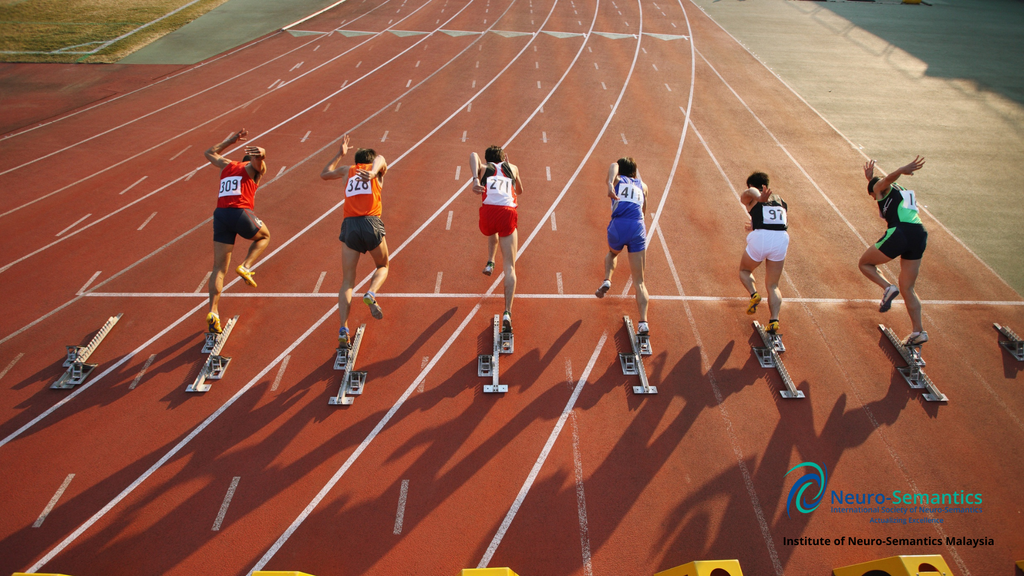
Sport provides one of the clearest examples of the power of immediate feedback.
A basketball player takes a shot. Within seconds, the result is obvious.
Did the ball go in?
Was the shot too strong?
Was it too short?
Did the angle need adjusting?
The feedback arrives almost instantly, allowing the player to make an immediate correction. The faster the feedback loop, the faster the opportunity to learn.
This is one reason skill development in sport can be so powerful. The athlete does not need to wait weeks or months to discover whether an adjustment worked. The information is available immediately.
Fast Feedback Accelerates Expertise
The same principle applies far beyond sport.
When someone receives timely, specific feedback while remaining in a strong learning state, the results begin to reveal the next action. This is also the foundation of deliberate practice. Rather than practising everything at once, the individual focuses on one skill, repeats it multiple times, receives feedback, makes an adjustment, and tries again.
The cycle may look simple: Practise → Receive Feedback → Adjust → Practise Again
Repeated often enough, this process can significantly accelerate the development of expertise. The goal is not simply to repeat an activity. It is to repeat it with awareness and correction.
The Real Challenge: How People Respond to Results
The power of feedback depends heavily on attitude. When results are immediately labelled as “good” or “bad,” their value can easily be reduced. A disappointing outcome may trigger embarrassment, frustration, defensiveness, or self-judgement. When that happens, attention shifts away from learning and toward protecting the ego. But the result itself is simply information.
- It shows what happened.
- It provides clues about what worked.
- It highlights what may need to change.
- It does not define the person’s ability, intelligence, or value.
This distinction is critical.
How to Turn Feedback into Continuous Improvement
Staying on the cutting edge is not only about learning more. It is about building a stronger habit of observing, interpreting, and acting on results.
1. Pay Attention to the Results You Are Already Getting
The first step is awareness. Before looking for a new strategy, ask whether the current approach is producing the intended result.
- What is working?
- What is not working?
- What keeps repeating?
- What feedback has been ignored?
Improvement often begins not with doing more, but with noticing more.
2. Separate the Result from Personal Judgement
A poor result is not the same as personal failure. Instead of saying, “I am not good at this,” a more useful question is: “What is this result showing me?” That small shift keeps the focus on learning rather than self-criticism. High performers understand that results are data. They use the information without allowing it to define them.
3. Shorten the Feedback Loop
The longer the delay between action and feedback, the harder it becomes to connect cause and effect. Where possible,
- Create faster feedback.
- Review work sooner.
- Ask for input earlier.
- Track key results more frequently.
- Test ideas on a smaller scale before fully committing.
The quicker the feedback arrives, the quicker the adjustment can be made.
4. Change One Thing at a Time
Trying to improve everything at once makes it difficult to know what actually made the difference. A more effective approach is to identify one behaviour, one skill, or one process to improve, make a small adjustment, observe the result, then decide what to do next. This is the essence of deliberate practice.
5. Repeat What Works and Adjust What Does Not
Not every improvement requires a completely new approach. Sometimes the most valuable lesson is simply identifying what is already working and doing more of it.
When a result improves, ask:
- What changed?
- What contributed to the better outcome?
- What should be repeated?
- When a result does not improve, adjust and test again.
Learning comes from both outcomes.
6. Build Feedback into the Way You Work
The strongest performers and organisations do not depend on occasional feedback. They make it part of the process. That may mean regular performance reviews, project debriefs, client feedback, coaching conversations, data reviews, peer observations, or simple reflection after an important task. The objective is to make feedback normal rather than something that only appears when something goes wrong.
Keep Learning from the Results
There is always another level of knowledge to develop, another technique to sharpen, and another way to improve performance. The people and organisations that stay ahead are not necessarily those that avoid mistakes. They are those that learn from results faster.
The cycle is simple: Act. Observe. Learn. Adjust. Repeat.
And perhaps the most useful question to keep asking is: What are the results telling you to do next?
Curated by Danielle Tan.
Reference:
- [Meta-Coaches] 2026 Morpheus #37 A MOST POWERFUL INGREDIENT by L. Michael Hall, Ph.D. Executive Director, ISNS.
